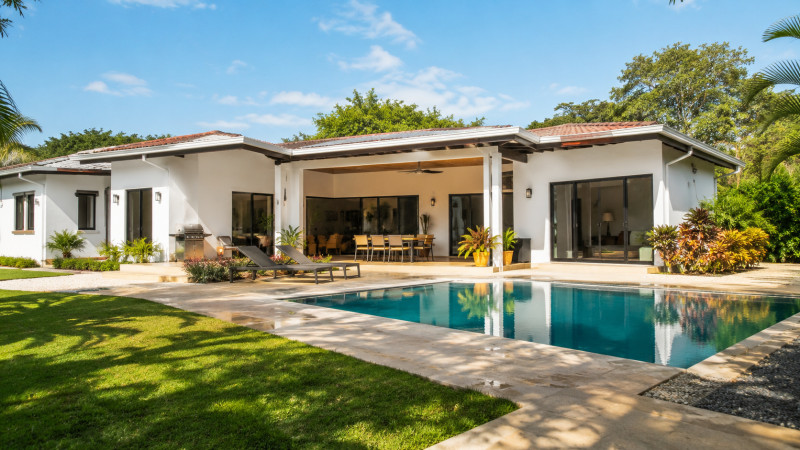
Costa Rica’s real estate market attracts buyers from the United States, Canada, and other parts of North America. Some are searching for a retirement or vacation home, while others are interested in luxury homes, beachfront property, or an investment property that can generate rental income.
Although cash purchases remain common, foreign buyers now have several financing options. Depending on the buyer’s financial profile and the property, these may include local bank mortgages, international lenders, owner financing, private third-party loans, or borrowing against assets in the buyer’s home country.
Financing is only one part of the transaction. For an overview of due diligence, contracts, closing, and property ownership, read our complete guide to buying property in Costa Rica.

Can Foreigners Own Property in Costa Rica?
In most cases, foreigners can own titled property under the same general framework available to Costa Rican citizens. A buyer can usually purchase property personally or through a Costa Rican corporation, depending on their legal, tax, and estate-planning needs.
Additional considerations apply to properties located within the maritime zone. Some coastal properties are held through government concessions rather than full titled ownership, and traditional lenders may be unwilling to finance them.
This is especially important when evaluating beachfront property. Before relying on financing, an experienced Costa Rican attorney should confirm the property’s ownership structure, title status, legal access, water availability, and eligibility for the selected lender.
Financing Options for Foreign Buyers
1. Local Bank Mortgages
Some foreign buyers apply for real estate loans through local banks, including Banco Nacional, Banco de Costa Rica, BAC, Banco BCT, and Banco LAFISE.
Local bank mortgages may offer longer repayment periods than private loans or owner financing. However, the approval process can require extensive documentation, particularly when the applicant is a non-resident or earns foreign income.
Banks may request:
- Recent bank statements
- Proof of income
- Personal or business tax returns
- Credit reports or financial references
- Proof of address
- Passport or identification
- Evidence of the down payment
- An explanation of the source of funds
- Property appraisal and title documentation
Residency status can influence lender requirements, but it is not always the deciding factor. The bank will also consider the buyer’s income, financial history, existing debts, available reserves, and the property offered as collateral.
Banco LAFISE
Offers home loans in Costa Rica for purchasing, constructing, renovating, or refinancing residential property.
Its standard home-loan program currently advertises terms of up to 30 years, financing in U.S. dollars or Costa Rican colones, and financing of up to 70% of the property value. Its private-banking program advertises financing of up to 80%, subject to the applicant’s profile and country of residence.
LAFISE also states that approved borrowers must maintain life insurance on the outstanding loan balance and insurance covering the mortgaged property.
Foreign buyers should contact the bank directly to confirm eligibility, required documentation, current interest rates, and acceptable property types before submitting an offer that depends on financing.
2. Volo Loans
Offers U.S.-based financing for qualifying U.S. citizens and permanent residents purchasing residential property in Costa Rica.
Volo evaluates applicants using their U.S. credit, income, assets, and financial documentation. A Costa Rican credit history or residency status is not required.
Its current program information includes:
- Financing of up to 75% of the eligible property value
- A minimum down payment of 25%
- A minimum credit score of 680
- Fixed-rate and adjustable-rate options
- Loan terms of up to 30 years
- Financing for single-family homes, condominiums, townhomes, and certain approved multi-unit properties
- Closings that may be completed in as little as 30 days for qualifying transactions
The actual loan amount is based on the lower of the purchase price or appraised value, and many buyers may choose or be required to contribute more than the minimum down payment.
Volo may be appropriate for a vacation home, second residence, or residential investment property. The property must still pass the lender’s title, legal, appraisal, and underwriting review.
3. Second Street
An international lender offering U.S.-style mortgages to qualifying U.S. citizens and lawful permanent residents buying property in Costa Rica.
Its current program includes:
- Thirty-year fixed-rate mortgages
- A minimum down payment generally starting at 25%
- A minimum FICO score of 720
- A minimum loan amount of $150,000
- Purchase, refinance, and cash-out refinance options
- No prepayment penalties
- A typical application-to-closing period of four to six weeks
Second Street finances completed houses, condominiums, and townhomes on titled property with legal access to water and electricity. It does not currently finance vacant land, unfinished construction, or construction loans.
The company can finance a primary residence, second home, or investment property, but both the borrower and property must meet its underwriting requirements.
Canadian and other international buyers should not assume they qualify for Volo or Second Street. Both programs currently state that applicants must be U.S. citizens or lawful permanent residents.
4. Owner Financing
Owner financing, also called seller financing, allows the property owner to finance part of the purchase price directly.
The buyer usually makes a substantial down payment and repays the remaining balance according to terms negotiated with the seller. Some agreements use monthly payments followed by a larger balloon payment at the end of the loan term.
Owner financing may be useful when:
- The buyer does not qualify for conventional bank loans
- The seller is willing to receive part of the purchase price over time
- The parties need a faster or more flexible approval process
- The property does not meet a bank’s lending requirements
The agreement should establish the interest rate, payment schedule, repayment period, collateral, default provisions, late-payment penalties, and prepayment rights.
Owner financing may be more flexible, but it is not informal. A Costa Rican attorney should prepare or review the agreement and ensure that the seller’s security interest is properly documented and registered.
5. Private Third-Party Financing
Private third-party financing provides another option for buyers who do not qualify for local bank mortgages or prefer a different loan structure.
Some private lenders now offer longer-term real estate loans designed for foreign buyers, rather than only the short-term hard money or bridge loans traditionally associated with private financing.
Depending on the lender, the property may be used as collateral through a mortgage or guarantee trust. In a guarantee-trust structure, the property or its beneficial rights may be placed into a trust to secure repayment of the loan.
The exact closing structure affects the transfer of ownership, flow of funds, registration expenses, legal fees, and timing of taxes and stamps. It should be explained by an independent Costa Rican attorney before the buyer signs the purchase or financing documents.
Private financing may offer more flexibility, but buyers should carefully compare:
- Interest rates
- Origination fees
- Repayment periods
- Balloon payments
- Prepayment penalties
- Default provisions
- Guarantee-trust expenses
- Legal and administrative costs
Hard money loans are generally shorter-term and may carry higher interest rates. They are more commonly used for land, development, renovation, bridge financing, or transactions that need to close quickly.
6. Financing Through Assets in the Buyer’s Home Country
Some buyers fund their Costa Rican purchase by borrowing against assets in the United States, Canada, or another home country.
Possible options include:
- A home-equity line of credit
- Cash-out refinancing
- A securities-backed line of credit
- A personal or investment loan
- Financing through an existing banking relationship
This approach may provide lower interest rates or faster access to funds than financing the Costa Rican property directly. It can also allow the purchase to proceed as a cash transaction from the seller’s perspective.
However, the buyer’s home, investments, or other assets become collateral. Buyers should review the risks, tax consequences, and repayment obligations with qualified financial professionals in their home country.
What Do Lenders Review?
The approval process involves an evaluation of both the borrower and the property.
The borrower may need to provide proof of income, tax returns, bank statements, credit information, proof of address, identification, and documentation showing the source of funds for the down payment and closing costs.
Applicants earning foreign income should be prepared to show that the income is stable, consistent, and verifiable. Self-employed buyers may need to provide additional business records or several years of tax filings.
The property must also satisfy the lender’s legal and appraisal requirements. A buyer can have a strong financial profile and still be declined if the property:
- Has title discrepancies
- Lacks legal access
- Does not have documented water availability
- Is unfinished
- Is located on concession land
- Has unresolved condominium or municipal obligations
- Appraises below the agreed purchase price
A completed home on titled land is usually easier to finance than raw land, construction, or an unusual commercial asset.
Financing Contingencies in the Buying Process
A financed purchase offer should include a clearly written financing contingency.
The buyer needs sufficient time to submit the application, provide documents, complete the appraisal, and obtain final approval. The seller also needs a specific deadline so the property is not held under an open-ended financing condition.
The offer should establish:
- The deadline for applying for the loan
- The deadline for obtaining final approval
- What qualifies as formal approval
- What happens if the appraisal is below the purchase price
- When the deposit becomes non-refundable
- Who pays lender and financing expenses
- What happens if the lender declines the application
- Whether the buyer can change lenders during the transaction
The attached Invicta Legal presentation emphasizes that financing contingencies should have a clear timeline and should address how closing expenses will be handled.
Prequalification or preapproval does not guarantee that the loan will close. Final approval may still depend on the appraisal, title review, due diligence, property insurance, and verification of the buyer’s financial information.
Legal Representation and Closing Costs
The lender’s attorney represents the lender, and the seller’s attorney represents the seller. Neither automatically serves as independent counsel for the buyer.
A buyer’s attorney can review the purchase agreement, due-diligence report, loan documents, guarantee trust, corporate structure, and final closing statement. Independent representation is particularly important when several attorneys, escrow providers, and financing entities are involved.
In addition to the down payment, buyers may need to budget for:
- Transfer tax and registration stamps
- Legal fees
- Notary fees
- Appraisal costs
- Escrow expenses
- Loan origination fees
- Guarantee-trust costs
- Property and life insurance
- Corporate expenses, when applicable
For a more complete breakdown, read our guide to the real costs of buying property in Costa Rica.
Annual property taxes are generally connected to the property’s registered value. Buyers should also confirm if the property is subject to any additional tax applicable to high-value residential properties.
How a Real Estate Agent Can Help
An experienced real estate agent can help international clients identify properties that may qualify for financing and coordinate the buying process with lenders, attorneys, appraisers, escrow providers, and sellers.
The agent does not replace a lender, attorney, accountant, or financial adviser. However, the agent can help:
- Establish realistic contract and closing deadlines
- Ask sellers about owner-financing options
- Identify potential property issues early
- Coordinate access for the appraisal
- Communicate lender requirements to the seller
- Connect the buyer with independent legal and financial professionals
At Coldwell Banker Coast to Coast Properties, our team can help buyers identify suitable properties and understand how financing may affect their search, offer, and closing timeline.
Ready to Begin Your Property Search?
Financing options vary according to the buyer, lender, and property. Our team can help you identify homes that match your goals, establish a realistic buying timeline, and connect you with independent lenders, attorneys, and financial professionals.
Let's discuss your plans and begin your Costa Rica property search.
Important: Coldwell Banker Coast to Coast Properties is not a lender and does not guarantee loan approval, interest rates, or financing terms. Programs and eligibility requirements can change. Buyers should verify current information directly with each lender and obtain independent legal, financial, and tax advice before proceeding.